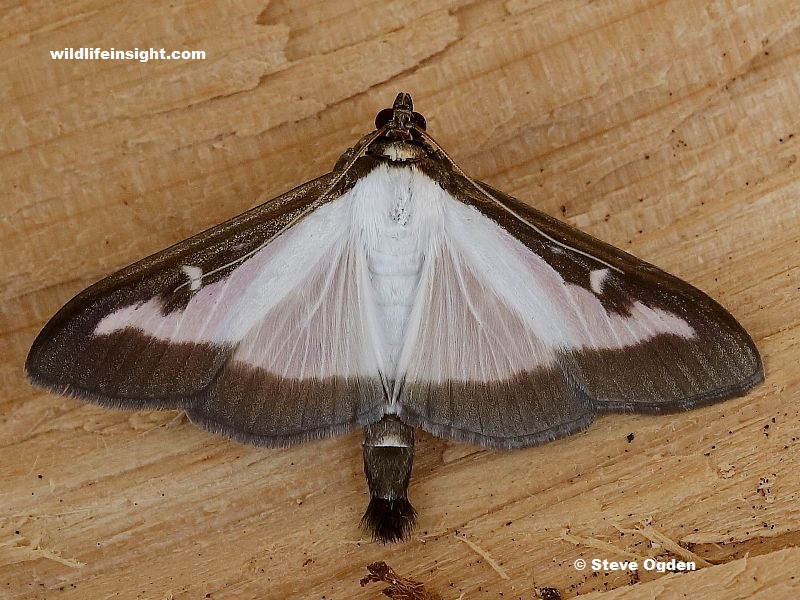
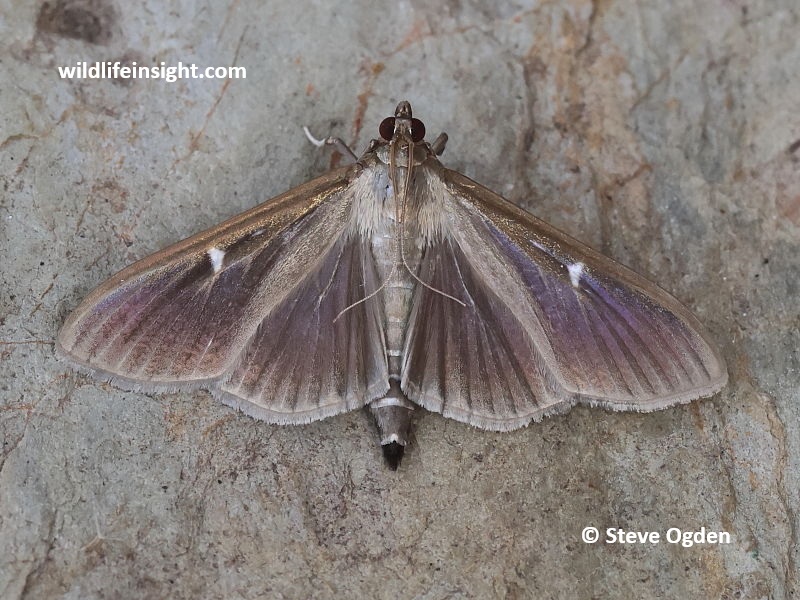
Box Tree moth (Cydalima perspectalis)
The Box Tree moth (Cydalima perspectalis) has a wingspan of c 40mm and is a member of the large Pyralid moth family.
The species is better known for the defoliation its caterpillars cause to Box hedging and trees (Buxus species). Brown expanses of once green box hedging have become an increasing sight in many gardens in the south east of England.
Although in continental Europe the moth has long been considered a major pest it is only in recent years the species has begun to colonise the south east of England.
UPDATE – recent recordings show the spread of this species has become even more rapid with records now reaching the western counties of the Uk . Andrew Jones recorded an adult in his garden in Portishead on the outskirts of Bristol in 2018.
By 2023 this species had reached parts of South West Cornwall. By 2026 it had become established and breeding in gardens in Falmouth.
Migration and the importing of eggs on plants and climate change are thought to be the reasons for its arrival and expansion.
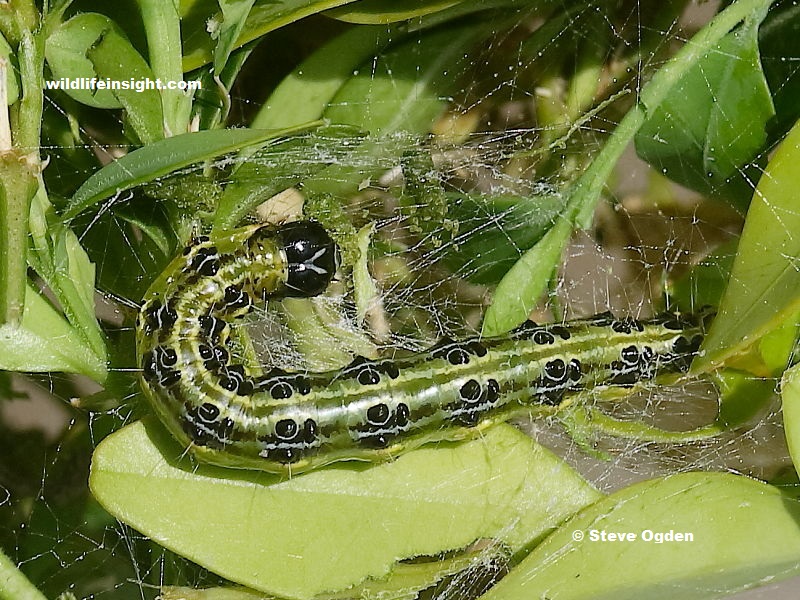
Box Tree caterpillar


The species can have several broods in warmer parts of its range.
When single brooded the large batches of eggs are laid on the larval foodplant which then overwinter.
The caterpillars of overwintering eggs hatch in the Spring and may soon become an infestation, completely defoliating large expanses of box hedging.
The fully grown Box Tree caterpillar is approximately 30 mm in length.
Signs of Box caterpillar infestation
Signs to watch out for are the first signs of browning on leaves, slight silk webbing and specks of frass.
As the caterpillars grow and numbers increase larger areas of the plant will become brown and defoliated.
When a severe infestation takes place whole hedges may become completely devoid of any leaves.
At this stage fully grown caterpillars will either pupate amongts the food plant or wander in search of an alternative pupation site.
While those partly grown caterpillars that are still feeding will leave the defoliated hedging in search of a new food source.
Plants may never recover if subjected to intense infestation and defoliation.

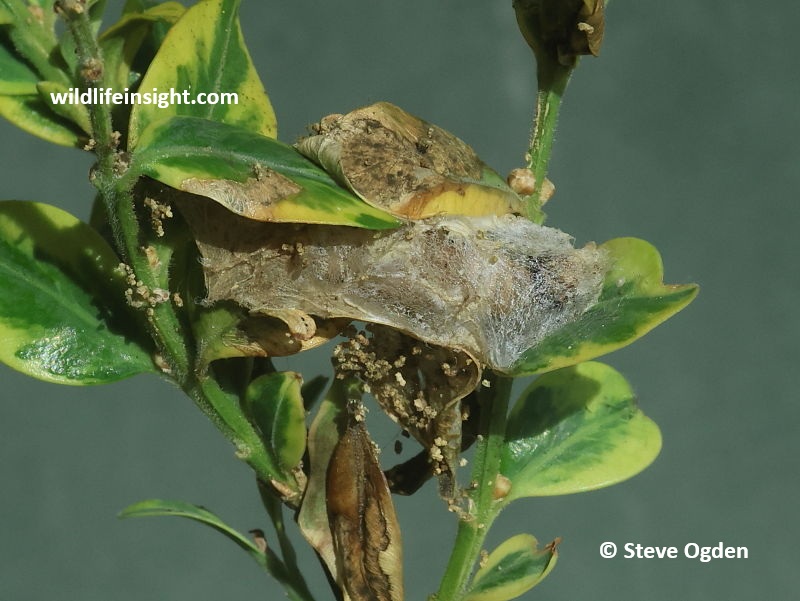
Pupating Box Moth caterpillars (Cydalima perspectalis)
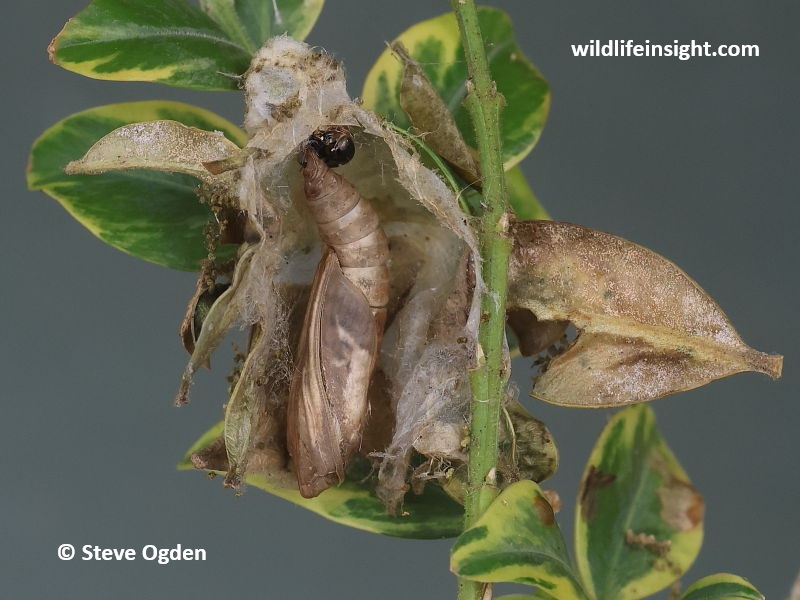
The fully grown caterpillars of the Box Moth pupate inside a silk cocoon spun amongst the leaves of the larval foodplant.
The images shown are of cocoons spun amongst leaves of a Variegated Box bush in a Cornish garden.
Where the spun silk has been parted the suspended pupa has been revealed together with the discarded black larval head casing.
The shape and colour of the soon to emerge Box Moth can also be seen.
Other caterpillars can be seen in the –
Moth caterpillar gallery and species pages
Butterfly caterpillar gallery and species pages
Box-tree Moths in Spain and France

